
By Zach Nickels, Harneet Gill
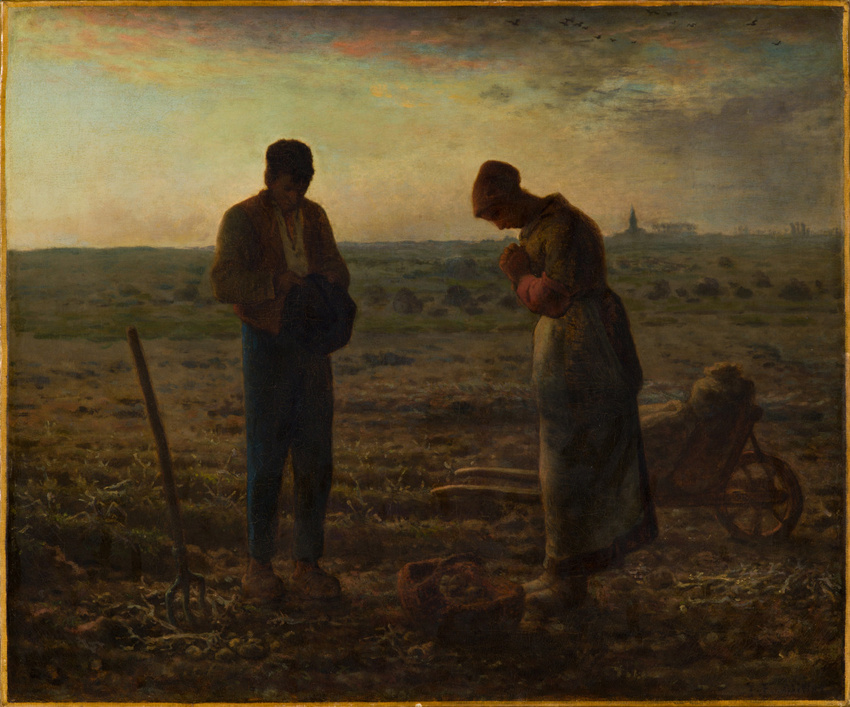
Jean-Francois Millet’s “The Angelus” Painting https://www.musee-orsay.fr/en/artworks/langelus-345
On November 4, 2025, the Federal Government delivered Budget 2025, entitled “Canada Strong”, in which it expressed its intent to amend Canada’s Copyright Act to protect artists’ and creators’ copyrights. Specifically, the Federal Government has proposed creating an “Artist’s Resale Right”, which it describes as aiming to ensure that Canadian visual artists benefit from the future sales of their work.
Artist’s Resale Right Background
The Artist’s Resale Right concept was first borne-out in France in 1920 as droit de suite after Jean-Francois Millet’s The Angelus painting soared from its initial sale of 1,000 francs to a record 553,000 francs at auction, while his heirs lived in poverty sparking the Artist’s Resale Right movement.
In 1948, the Artist’s Resale Right was later added to Article 14ter of the Berne Convention. Article 14ter essentially states that an author, or after their death, the persons authorized by national legislation, shall with respect to original works of art and manuscripts of writers and composers, enjoy the “inalienable right to an interest in any sale of the work subsequent to the first transfer by the author of the work”. However, the entitlements under this right vary between jurisdictions, with some countries offering artists 5% of the total sale, others applying a sliding scale (2%-10%), and others yet allocating only the profit made on sales of the subject work.
As a practical example, let’s assume a Canadian painter sells their artwork for $5,500 in 2025. If resold at auction a decade later for $48,000 in France (an implementing nation), the artist receives approx. 4% ($1,920) via a collecting society, provided Canada’s law permits reciprocal claims. This real-world scenario highlights the importance of Canada’s pending reforms for artists globally.
A Canadian Proposal for an Artist’s Resale Right
In Canada, the Canadian Artists’ Representation/Le Front des artistes canadiens (“CARFAC”) and Le Regroupement des artistes en arts visuels du Québec (“RAAV”) jointly recommended that the federal government introduce an Artist’s Resale Right in Canada to apply to eligible secondary sales of artwork. Under their proposal, the right would cover the resale of original visual artworks during the artist’s lifetime and continue to benefit the artist’s estate for the duration of copyright protection. They further suggested that the royalty rate payable to rightsholders be set at 5% of the resale price and apply only to works sold on the secondary market for at least $1,000.
In terms of administration, the recommendation provides that both the art market professional (such as the gallery, dealer, or auction house) and the seller of the artwork should be jointly responsible for ensuring payment of the royalty. Finally, CARFAC and RAAV proposed that the management and distribution of these royalties be administered by the Canadian Artists’ Representation Copyright Collective (“CARCC”), which currently operates under the business name Copyright Visual Arts – Droits d’auteur Arts visuels.
Tension with Personal Property Rights
The creation of this right, however, has sparked debate since it extends beyond mere copyright to personal property rights, which fall under provincial jurisdiction. Section 3(1)(j) of the Copyright Act only captures the very first authorized sale or transfer of a physical copy of a work. Once the first sale is made, the buyer owns the tangible asset and subsequent sales of the work do not infringe the author’s copyright despite copyright in the work remaining with the author or assignee.
This concept is known as the doctrine of exhaustion (or first sale doctrine in the United States). Canada’s Copyright Act contains provisions that can be construed as embodying the doctrine of exhaustion, and its applicability has been confirmed by the Supreme Court of Canada in Théberge v. Galerie d’Art du Petit Champlain inc. Consistent with the doctrine of exhaustion, critics of the Artist’s Resale Right have argued that movable property must circulate freely and without hidden charges, and that the proposed legislation risks impeding that flow.
A Potential Detrimental Impact on Artists’ Initial Sales?
There is also an argument to be made about the potential for detrimental effects on artists’ financial interests resulting from an Artist’s Resal Right. For example, an anticipated resale royalty obligation under the Artist’s Resale Right could motivate the initial purchase to lower their offer on the initial sale, as buyers may speculatively discount what they are willing to pay to account for a future royalty.
Emerging artists often depend heavily on the initial sales of their works, and the potential downward pressure created by the Artist’s Resale Right could disproportionately affect them by reducing both the prices that their works attract and their potential volume of sales volume. In theory, this ripple effect could create difficulties for emerging artists to gain a foothold in the market, as their works could become comparatively less attractive than assets not encumbered by future royalty obligations.
Concluding Thoughts
In sum, a durable framework for Artist’s Resale Rights must work in practice across the full life of a work, for all players involved including artists, intermediaries, and collectors; Like all things copyright, a balance must be struck with respect to artists and owners alike.
In a balanced copyright ecosystem, artists should be able to participate in the long-term success and appreciation of their creations, and owners should have their expectations safeguarded when freely dealing with their personal property. Whether Canada’s proposed Artist’s Resale Right actually satisfies this balance has yet to be tested, but copyright owners and art collectors will certainly be watching with great interest.
